In the fast-paced world of texting, chats, and online conversations, understanding the meaning of terms and abbreviations is more important than ever.
One word that often pops up in professional chats, emails, and even casual discussions is “termination.”
Whether you’ve seen it in a work message, on a forum, or in a text conversation, knowing the termination meaning can prevent confusion and help you communicate more clearly.
Updated for 2026, this guide will break down everything you need to know about termination, its usage, common mistakes, and related terms. By the end, you’ll be confident using it in the right context.
What Does “Termination” Mean? Definition & Origin📝
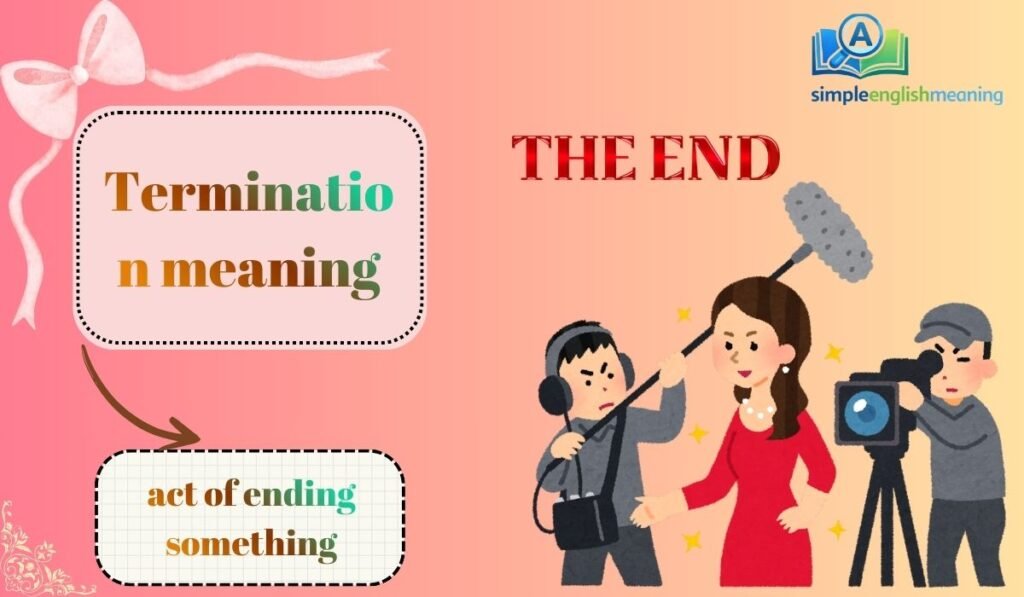
The word termination generally refers to the act of ending something. It can be applied in multiple contexts:
- Employment: Ending a job contract, often called “job termination.”
- Technology: Stopping a process, connection, or session.
- General Use: Any form of ending or conclusion.
Origin of the Word
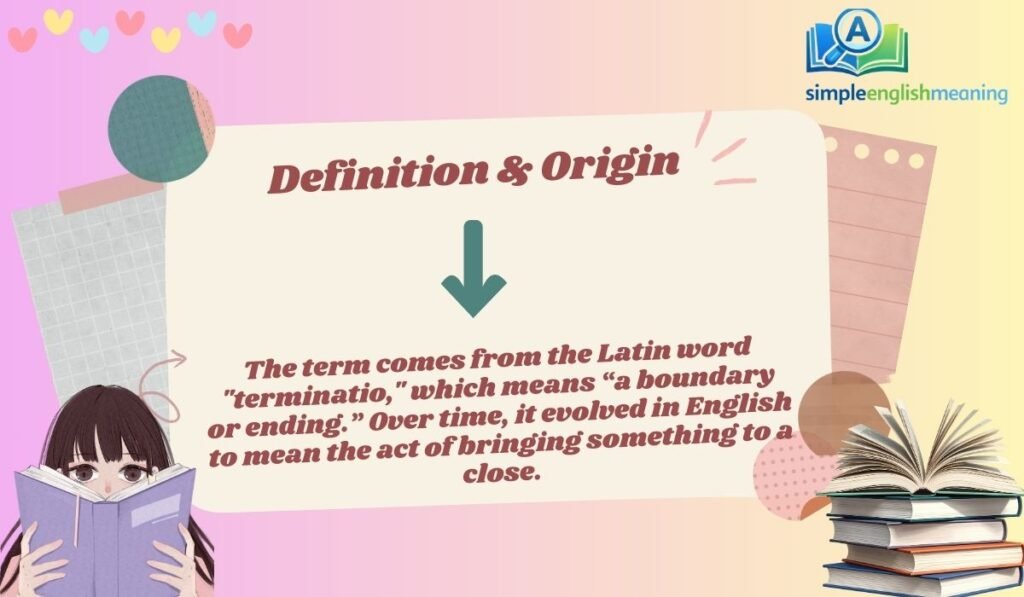
The term comes from the Latin word “terminatio,” which means “a boundary or ending.” Over time, it evolved in English to mean the act of bringing something to a close.
Key takeaway: Whenever you see “termination,” think “the ending of something”—whether it’s a job, a contract, or a process.
How to Use “Termination” in Texts or Chat 💬
While termination is often formal, it can appear in digital conversations, especially in work-related chats or online forums. Here’s how:
- Professional texts:
“Please confirm your availability before the termination of the project next Friday.” - Slack or Teams messages:
“The server will undergo termination at midnight for maintenance.” - Casual use (less common):
“The party’s termination was sudden, but it ended on a good note.”
Pro Tips:
- Always check the context—termination can sound serious in informal chats.
- Use simpler synonyms like “end” or “conclusion” if texting friends.
Examples of “Termination” in Conversations 📱
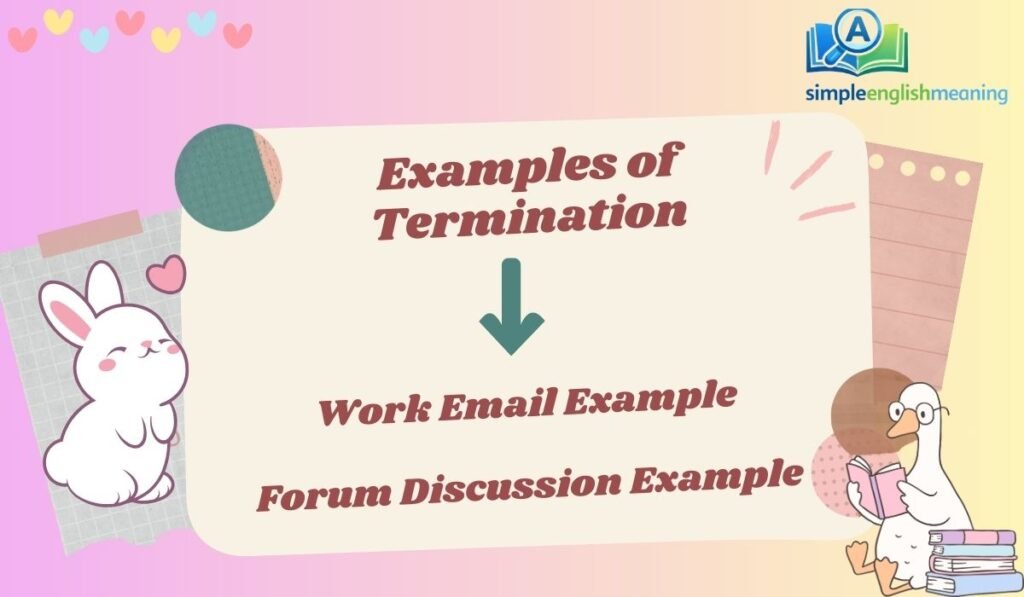
Here are some real-life scenarios showing termination meaning in context:
- Work Email Example:
“Your contract termination is scheduled for June 30th. Please complete all pending tasks.” - Forum Discussion Example:
“I’m worried about the termination of this software support next month.” - Casual Chat Example:
“The season finale felt like the perfect termination to the story arc.”
These examples highlight that termination is versatile—you’ll encounter it in professional, technical, and casual discussions.
Common Mistakes or Misunderstandings ⚠️
Misunderstanding termination can lead to confusion, especially in professional contexts. Here are common mistakes:
- Assuming termination is negative:
Not all terminations are bad—projects, meetings, or subscriptions can end positively. - Mixing up termination with suspension:
Termination ends something permanently, while suspension is temporary. - Overusing it in casual texts:
Using “termination” in place of “ending” or “stopping” in casual chats may sound too formal.
Tip: Always consider tone and context before using “termination” in a message.
Related Slangs or Abbreviations 🔗
While termination isn’t exactly a slang, it’s often associated with workplace or tech abbreviations:
- TBD (To Be Determined): Often used before a termination date is finalized.
- ETA (Estimated Time of Arrival/End): Sometimes linked to project termination.
- EOD (End of Day): Can be related to deadlines or task termination.
Fun fact: In tech, termination can refer to ending connections, processes, or server sessions, which is why it shows up in IT chats frequently.
Practical Use in 2026: Where You’ll See “Termination” 🌐
In modern texting and online communication, termination is relevant in:
- Professional emails and chats (e.g., job contracts, project deadlines)
- Technical discussions (e.g., server termination, process termination)
- Legal or formal messages (e.g., termination clauses in agreements)
- Casual storytelling online (e.g., describing the end of an event, series, or trend)
Pro Tip: Using “termination” correctly can make you sound professional and informed in both chats and emails.
Quick Reference Table for Termination Use 🗂️
| Context | Example Sentence | Notes |
|---|---|---|
| Employment | “Your termination date is July 15th.” | Formal, serious tone |
| Technical/IT | “Process termination is scheduled at 10 PM.” | Common in tech chats |
| Legal | “Termination clause included in contract.” | Formal, contractual |
| Casual/Storytelling | “The season’s termination surprised everyone!” | Informal, dramatic |
This table helps you quickly choose the right context and tone.
SEO Tips for Using “Termination Meaning” ✅
- Include variations like “termination definition,” “termination in chat,” “termination in text” naturally in the article.
- Use bold for the main keyword the first time it appears: termination meaning.
- Add internal links to related content:
- “Check out our guide on ‘contract meaning’ for more work-related terms.”
- “Learn about ‘suspension meaning’ to avoid common mistakes.”
Conclusion:
Understanding the termination meaning is essential in 2026, whether you’re navigating professional chats, tech discussions, or casual online conversations. Remember:
- Termination = the ending of something
- Context matters—professional vs. casual usage can differ greatly
- Avoid confusing it with suspension or overusing it in informal texts
By mastering the correct use of termination, you’ll communicate clearly, avoid misunderstandings, and sound confident in chats or emails.
Share your favorite text abbreviation in the comments! How do you usually use “termination” in your chats? Let us know and keep your texting game strong in 2026!