In today’s fast-moving digital world, we often come across dramatic phrases in chats, comments, memes, or online discussions that sound intense but are used casually.
One such phrase is drawn and quartered. You might see it on social media, in forums, or even in sarcastic text messages and wonder, “What does drawn and quartered mean?”
Understanding expressions like drawn and quartered is important because language online often borrows from history, exaggeration, and dark humor.
Knowing the real meaning helps you avoid misunderstandings and use the phrase correctly and confidently.
This guide breaks down the drawn and quartered meaning, its origin, modern usage, examples, and related slang—so you’ll never be confused again.
What Does “Drawn and Quartered” Mean?Definition & Origin
Definition & Origin
Drawn and quartered is an old English phrase that originally referred to a brutal historical punishment.
In modern English, it is almost never used literally. Instead, it is a figurative expression.
Simple Definition
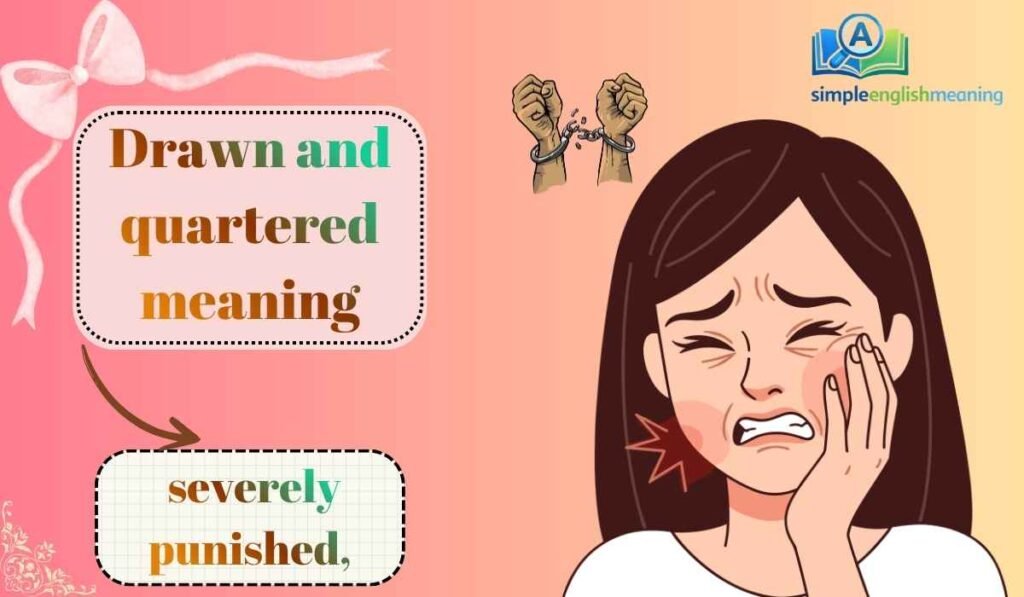
Drawn and quartered means:
- To be severely punished,
- To face extreme consequences, or
- To be harshly criticized or attacked, usually in an exaggerated or humorous way.
In texting and casual conversation, it’s often used dramatically or sarcastically, not seriously.
Historical Origin Explained Simply
The phrase comes from medieval England. Being “drawn and quartered” was a punishment for treason where a person was:
- Drawn: dragged through the streets
- Quartered: body divided into four parts
It was meant to be the harshest possible punishment.
👉 Important: When people use this phrase today, they are not referring to the historical act. It’s purely symbolic language.
How to Use “Drawn and Quartered” in Texts or Chat
In modern chat and internet language, drawn and quartered is used to exaggerate how badly someone might be treated for something they did or said.
Common Contexts Where It’s Used
You’ll most often see drawn and quartered in:
- Text messages between friends
- Social media comments
- Online forums (Reddit, Discord, Twitter/X)
- Casual spoken English
Tone Matters
The phrase usually carries:
- Sarcasm
- Dark humor
- Overdramatic exaggeration
It is not meant to be taken literally or seriously.
How People Use It Casually
People use it to mean:
- “I’ll get in huge trouble”
- “People will attack me online”
- “I’ll be heavily criticized”
Examples of “Drawn and Quartered” in Conversations
Here are some realistic, modern examples to help you understand how it’s actually used.
Example 1: Casual Texting
“If I tell my mom I failed the exam, I’ll be drawn and quartered.”
Meaning:
The speaker expects severe punishment or anger—not literal harm.
Example 2: Social Media Comment
“Say one wrong thing online and you’ll be drawn and quartered by the internet.”
Meaning:
You’ll be harshly criticized or canceled online.
Example 3: Workplace Humor
“If the boss finds out we missed the deadline, we’re getting drawn and quartered.”
Meaning:
They expect strong consequences, said jokingly.
Example 4: Online Forum Post
“I posted an unpopular opinion and got absolutely drawn and quartered in the comments.”
Meaning:
The user was attacked or criticized heavily.
Common Mistakes or Misunderstandings
Even though the phrase is popular, many people misunderstand or misuse it.
Mistake 1: Taking It Literally
Some non-native speakers think drawn and quartered means:
- Physically hurt
- Killed
❌ This is incorrect in modern usage.
✅ It almost always means figurative punishment or criticism.
Mistake 2: Using It in Formal Writing
Because of its violent origin, drawn and quartered is not appropriate for:
- Academic writing
- Professional emails
- Legal documents
It works best in:
- Casual conversations
- Informal blog posts
- Humor or opinion-based content
Mistake 3: Using It Too Seriously
Using the phrase in a serious emotional context can feel awkward or insensitive.
Better approach:
- Use it lightly
- Keep the tone casual or humorous
When Should You Use “Drawn and Quartered”?
To use the phrase naturally, think about context and audience.
Appropriate Situations
You can safely use drawn and quartered when:
- Talking with friends
- Joking about consequences
- Describing online backlash
- Using exaggeration for humor
Situations to Avoid
Avoid using it:
- With sensitive audiences
- In serious emotional conversations
- When discussing real violence or trauma
Related Slangs or Abbreviations
If you like learning phrases like drawn and quartered, here are some related expressions with similar meanings.
Similar Expressions
- Ripped apart – harshly criticized
- Dragged – criticized publicly (especially online)
- Canceled – socially rejected due to controversy
- Flamed – attacked verbally online
- Roasted – humorously criticized
Internet Slang Alternatives
- “They cooked me in the comments.”
- “I got destroyed online.”
- “They came for me.”
These are more modern and less dark than drawn and quartered, but they often express the same idea.
Is “Drawn and Quartered” Still Relevant Today?
Yes—but mostly as an idiom, not a literal phrase.
Why It Still Appears Online
- It’s dramatic and expressive
- It adds humor through exaggeration
- It sounds intense but is understood metaphorically
In meme culture and internet discussions, old phrases often get reused for dramatic effect.
Cultural and Language Insight
Using phrases like drawn and quartered shows how English:
- Evolves over time
- Recycles historical terms
- Turns serious concepts into figurative language
It’s a great example of how context completely changes meaning in modern communication.
SEO Tip for Content Creators
If you’re writing about slang or phrase meanings:
- Always explain literal vs modern meaning
- Add real-life examples
- Use conversational language
- Update content regularly
This helps both users and search engines trust your content.
Canclusion:
To sum it up, drawn and quartered is a historical phrase that has transformed into a figurative expression in modern English.
Today, it simply means facing severe punishment, backlash, or criticism, often said jokingly or sarcastically.
You’ll see it most in informal chats, online discussions, and humorous situations.
Understanding phrases like this helps you communicate more naturally and confidently in digital spaces.
Language online moves fast, and knowing the meaning behind dramatic expressions keeps you in the loop and prevents confusion.