In the age of texting, instant messaging, and social media, every word, emoji, and abbreviation carries a special meaning.
One word you might often see in chats or captions is “sulking”. But what does it really mean when someone says they’re sulking, or when you spot it in a message?
Understanding the sulking meaning is crucial if you want to keep up with modern texting culture and avoid miscommunication.
Whether you’re chatting with friends on WhatsApp, posting a story on Instagram, or scrolling through TikTok comments, recognizing the context of sulking can save you from confusion and help you respond appropriately.
Updated for 2026, this guide breaks it all down in simple, relatable terms.
What Does “Sulking” Mean? Definition & Origin: 😒
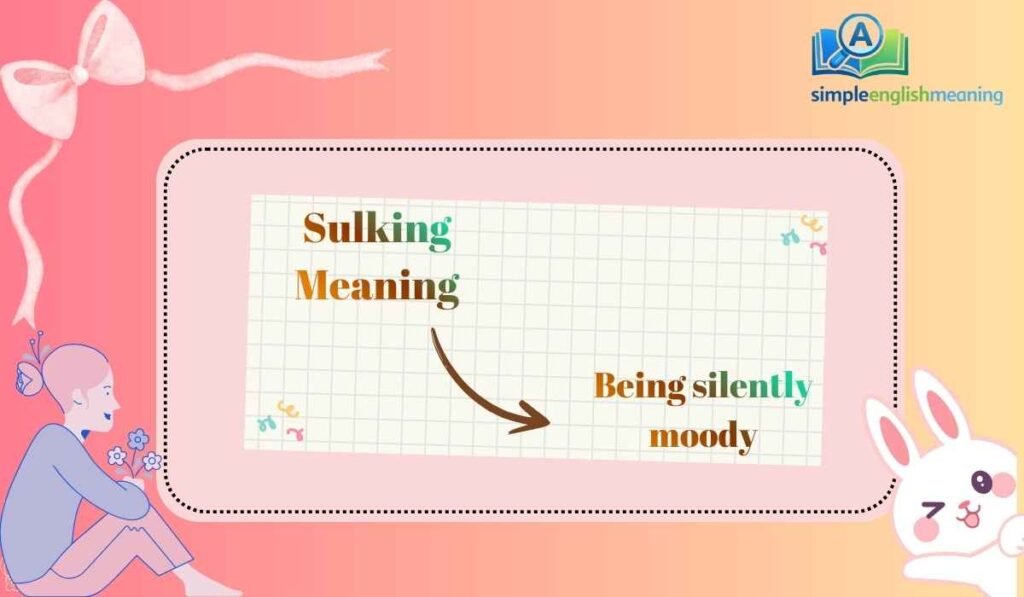
At its core, sulking refers to the act of being silently moody, upset, or pouting, usually because of disappointment, annoyance, or frustration.
- Dictionary meaning: To be silently gloomy or silently express displeasure.
- Chat meaning: When someone texts “sulking,” they usually mean they’re upset about something but not openly expressing it.
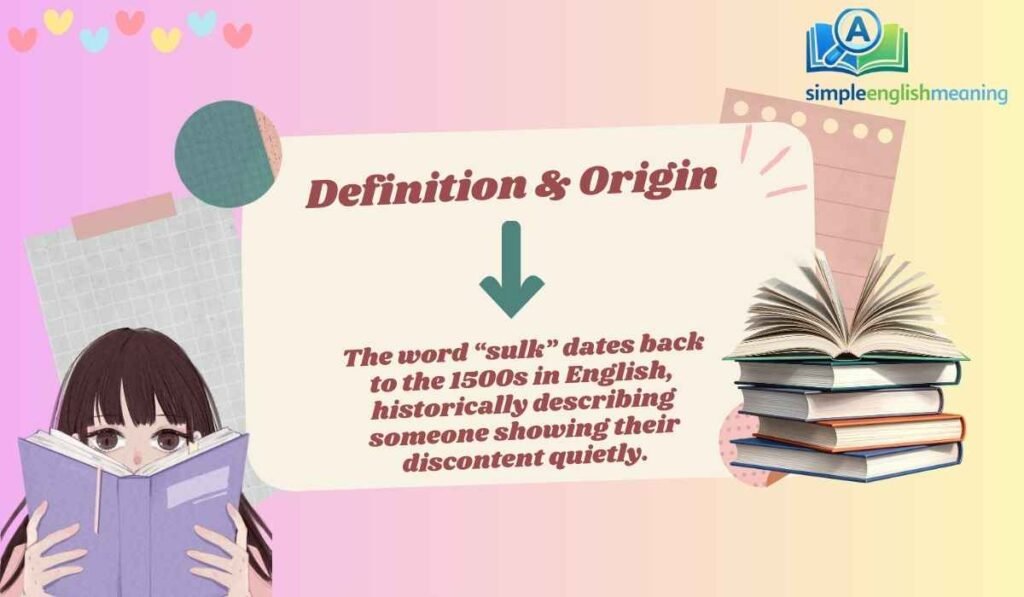
- Origin: The word “sulk” dates back to the 1500s in English, historically describing someone showing their discontent quietly.
In modern texting culture, sulking often comes with emojis like 😔, 😢, or 😤 to visually express mood. It’s a subtle way of saying, “I’m upset, but I’m not yelling about it.”
How to Use “Sulking” in Texts or Chat 💬
Using sulking correctly can make your messages more expressive and relatable. Here are some tips:
- Express mild disappointment:
- “I’m sulking because you forgot my birthday 😔”
- Show playful pouting in flirting or casual chats:
- “Stop ignoring me… I’m sulking 😏”
- Add humor or sarcasm:
- “You ate the last slice of pizza? I’m sulking… not dramatic at all 😤”
Pro tip: Pairing “sulking” with the right emoji makes your mood clear without needing a long explanation.
Examples of “Sulking” in Conversations 📝
Here are some real-life texting scenarios where sulking fits perfectly:
Friend Chat Example:
- Alex: “I couldn’t make it to your party 😞”
- Jamie: “Wow, I’m sulking now! You owe me a hangout 😤”
Flirty Chat Example:
- Sam: “You didn’t reply all day…”
- Jordan: “I know… I’m sulking 😔”
Social Media Caption Example:
- “Rainy days got me sulking 😢☔”
These examples show that sulking can be used in both serious and playful contexts, making it versatile in online communication.
Common Mistakes or Misunderstandings ❌
Even though sulking is simple, people often misuse it:
- Overusing it for dramatic effect: Not every slight annoyance is “sulking.” Save it for genuine moods.
- Ignoring tone cues: A text saying “I’m sulking 😔” could be serious or joking—context matters.
- Confusing with anger: Sulking is more passive; it’s different from being openly angry or confrontational.
Quick Tip: If someone is sulking in chat, avoid aggressive responses. Instead, acknowledge the mood or lighten the conversation with humor.
Related Slangs or Abbreviations 🔄
Understanding sulking often connects with other texting abbreviations or slang:
- Pouting: Similar to sulking, often used with 😘 or 😚
- Mood: Expressing an emotional state, e.g., “Rainy Monday mood 😔”
- Feeling blue: A casual way to say you’re sad or sulking
- Sigh: Often used to express frustration or disappointment
These terms frequently appear alongside sulking in social media posts and texts.
Why Sulking is Important in 2026 Text Culture 🌐
With AI-driven texting suggestions, viral memes, and short-form video captions dominating communication, knowing subtle mood expressions like sulking is more important than ever. Misunderstanding it can make you seem out-of-touch, while using it correctly can:
- Show emotional intelligence in conversations
- Improve relatability in social media captions
- Enhance playful or flirtatious texting
Even in professional digital communication, understanding casual mood expressions can improve team chat dynamics and client interactions.
How to Respond When Someone is Sulking 🤝
If a friend, partner, or colleague is sulking:
- Acknowledge their mood: “I see you’re sulking… want to talk about it?”
- Offer humor: “Sulking already? Save some drama for the weekend 😜”
- Give space if needed: Some sulking is just a silent vent; respect it.
Responding appropriately shows empathy, a key skill in modern digital communication.
Tips for Using Sulking in Social Media Posts 📱
- Pair it with relatable visuals (rainy day, coffee, pets).
- Use hashtags like
#sulkingvibesor#mood2026. - Combine with popular emojis to increase engagement.
Example Caption:
“Me after checking my bank account 😔 #sulkingvibes #MondayMood”
Updated 2026 Insights on Sulking 💡
- Sulking is trending in microblogging apps like X/Twitter, Threads, and TikTok comments.
- Users often combine sulking with GIFs or short videos to express mood visually.
- AI chat assistants may now suggest “sulking” as a mood tag in messaging apps for context-aware responses.
Keeping up with these trends ensures your digital communication feels natural and current.
Conclusion:
In 2026, understanding sulking meaning is more than knowing a word—it’s about recognizing subtle emotional cues in texting and online conversations.
Whether you’re using it to show mild disappointment, playful pouting, or relatable humor, sulking adds depth and nuance to digital communication.

I’m Jack Collins, a passionate meaning author at SimpleEnglishMeaning. I specialize in explaining words, phrases, and concepts in clear and simple English so everyone can understand them easily.I believe that language should be simple, practical, and helpful. My goal is to make learning meanings easy, interesting, and accessible for all readers.