In today’s fast-paced texting and chat culture, understanding words and phrases beyond their dictionary definitions can make all the difference.
One term that often pops up but leaves people scratching their heads is “discordant.”
Whether you see it in messages, social media threads, or forums, knowing its meaning can help you avoid miscommunication and even sprinkle a little sophistication in your chats.
Updated for 2026, this guide dives into the discordant meaning, how to use it, and real-life examples to make your texting game sharp and relatable.
What Does “Discordant” Mean? Definition & Origin🧐
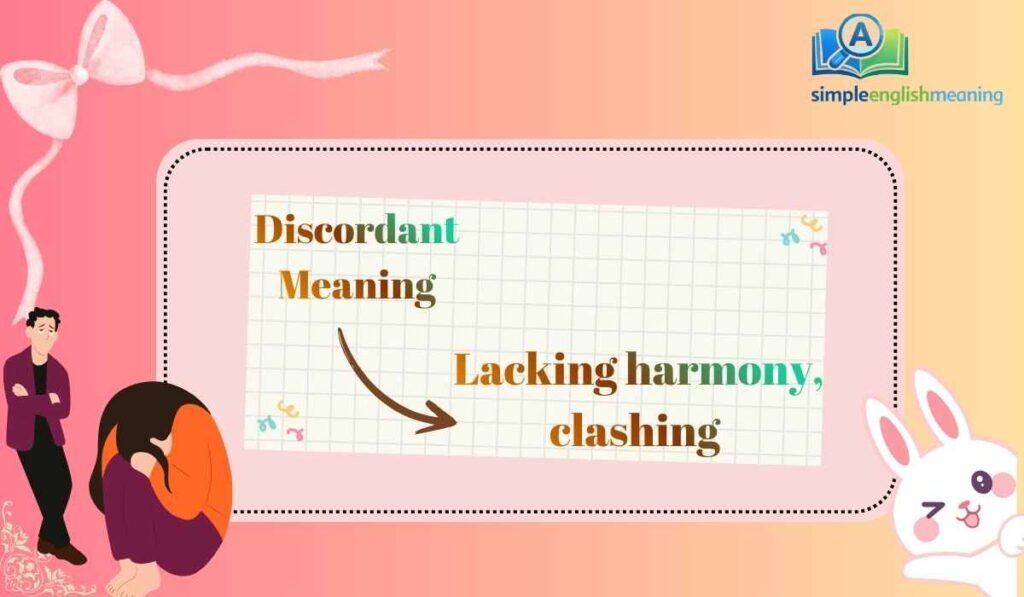
At its core, discordant is an adjective that describes something lacking harmony, clashing, or not fitting together.
- Origin: The word comes from the Latin “discordare,” meaning “to disagree.”
- General Use: In everyday English, it might describe sounds that clash, opinions that conflict, or any situation where elements just don’t match.
- Chat/Internet Context: While not as casual as “LOL” or “BRB,” people use discordant to highlight mismatched vibes, awkward situations, or conflicting messages in texts and online threads.
Example in a sentence:
- “Her cheerful emoji felt discordant with the sad news she shared.”
Notice how it conveys mismatch in tone or emotion—something crucial for understanding nuanced digital communication.
How to Use “Discordant” in Texts or Chat 💬
Using discordant in digital conversations can add flair, clarity, and a touch of intellect. Here’s how:
- Highlighting Contradictions:
- “Your excitement seems a bit discordant with the bad news!”
- Describing Mood or Tone:
- “That joke was funny, but the timing felt discordant.”
- Commenting on Mixed Signals:
- “Her messages were discordant—smiley faces with sad stories.”
Pro Tip: Keep it conversational. In casual chats, you can replace it with “clashing” or “off” for a lighter tone.
Examples of “Discordant” in Conversations 📱
Here are some real-life texting examples to make the usage crystal clear:
- Scenario 1 – Friend Chat:
- A: “I got an A on the test!”
- B: “Congrats! 😢”
- A: “Your reaction is kind of discordant lol.”
- Scenario 2 – Online Forum:
- User1: “The new game soundtrack is amazing!”
- User2: “I don’t know… it felt discordant with the scene.”
- Scenario 3 – Social Media Comment:
- “Posting a happy meme during that tragedy seemed really discordant.”
These examples show how discordant highlights tone mismatches and helps clarify the vibe of a conversation.
Common Mistakes or Misunderstandings ⚠️
Even smart texters get discordant wrong sometimes. Avoid these pitfalls:
- Overusing it: Not every mismatch is discordant—save it for real tonal or emotional clashes.
- Mixing it with “discord”: While related, “discord” is usually a noun (conflict), whereas “discordant” is an adjective (clashing).
- Using in casual memes excessively: Some audiences might find it too formal in casual chats.
Example of misuse:
- “LOL that cat video was discordant 😂” → Not the best fit unless the video truly has clashing elements.
Related Slangs or Abbreviations 🔗
While discordant itself isn’t slang, it often shows up near modern texting expressions that convey mismatch:
- IRL vs Online: Highlighting differences between real-life tone and online vibe.
- Mood vs Emoji Clash: Using 😢 when the message is funny—discordant vibes!
- Tone Policing Terms: Phrases like “off-brand,” “mixed signals,” or “clashing energy.”
Internal linking idea for WordPress:
- Related article: “Text Abbreviations That Capture Mood and Tone in 2026”
- Related article: “How to Spot Mixed Signals in Online Chats”
Practical Tips for Using “Discordant” in 2026 Texting 🌟
- Match the Context: Only use when there’s a real clash in mood, tone, or style.
- Pair with Emojis: A subtle 😅 or 🤔 can soften or clarify the tone.
- Keep It Short in Texts: Instead of long explanations, use it in short, punchy phrases.
- Learn from Trends: Check how influencers or forums use it—language evolves fast.
- Avoid Overcomplicating: If your audience is casual, pair it with simpler words like “off” or “weirdly mismatched.”
Why Understanding “Discordant” Matters in 2026 💡
Digital communication isn’t just about words; it’s about vibe, tone, and intent. Using words like discordant effectively helps you:
- Avoid Misunderstandings: Clarity in tone prevents confusion.
- Sound Polished: Shows emotional and linguistic intelligence.
- Navigate Online Communities: Forums, social media threads, and chat groups often value precise language.
In 2026, where online nuance is everything, understanding the subtle differences between “off,” “clashing,” and discordant gives you an edge.
Conclusion:
To sum up, discordant is more than just a fancy word.
It describes mismatches in tone, mood, and style, helping you navigate texts, chats, and social media with clarity and confidence.
From casual conversations with friends to professional online discussions, knowing how and when to use discordant will make your messages sharper and more relatable

I’m Jack Collins, a passionate meaning author at SimpleEnglishMeaning. I specialize in explaining words, phrases, and concepts in clear and simple English so everyone can understand them easily.I believe that language should be simple, practical, and helpful. My goal is to make learning meanings easy, interesting, and accessible for all readers.